Section
Quantum Algorithms
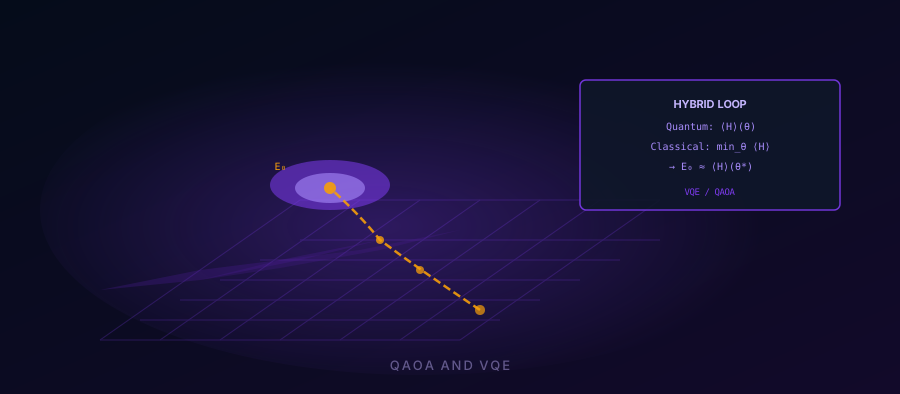
Before fault-tolerant quantum computers arrive, the algorithms most likely to demonstrate practical quantum advantage are variational: hybrid quantum-classical loops where a shallow quantum circuit estimates an objective function and a classical optimizer tunes the circuit parameters. VQE targets quantum chemistry; QAOA targets combinatorial optimization. Here is how both work, what they have achieved, and where the honest limits of the approach currently lie.
- Grover's Algorithm: The Quantum Speedup That Doesn't Break Everything — But Still Matters
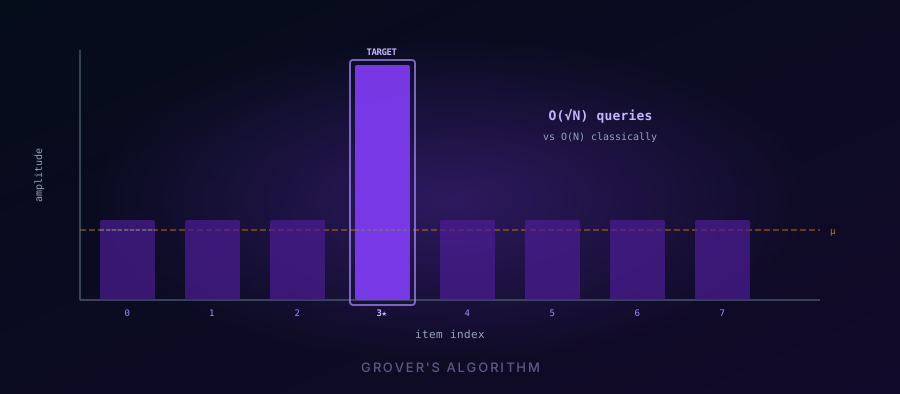
Grover's algorithm searches an unstructured database of N items in O(√N) steps rather than O(N) classically — a quadratic speedup that is provably optimal for quantum computers. Unlike Shor's exponential advantage, the quadratic speedup can be countered by doubling key sizes. But understanding exactly why, and where Grover's algorithm actually applies, is essential for anyone reasoning about quantum cryptographic risk.
- The Algorithm That Broke RSA: Shor's Factoring Algorithm Explained
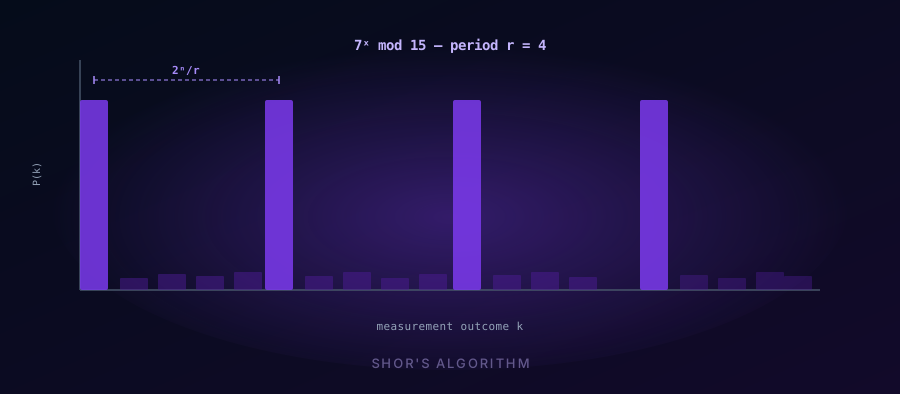
In 1994, Peter Shor proved that a quantum computer can factor large integers in polynomial time — rendering RSA, ECC, and Diffie-Hellman cryptography conditionally obsolete. Here is exactly how the algorithm works, why the Quantum Fourier Transform is the key, what hardware it would actually require, and what the world is doing about it.
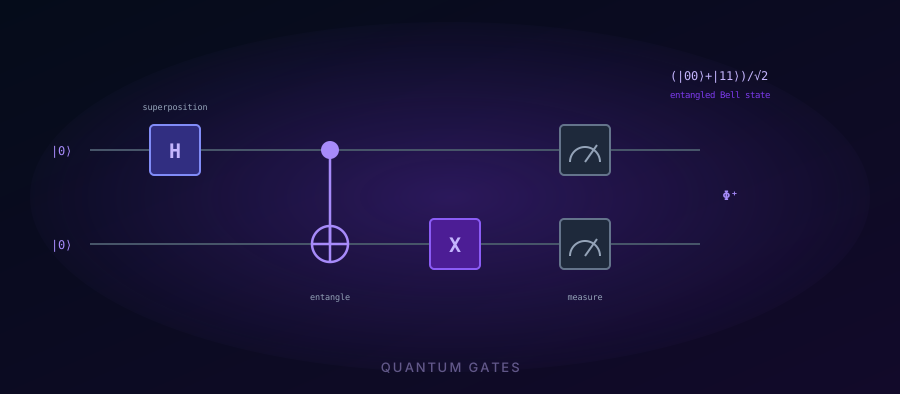
- Quantum Gates Explained: The Logic Behind Quantum Circuits
A practical deep-dive into quantum gates — the Hadamard, Pauli, and CNOT operations — and how combining just two of them creates entanglement, the most powerful resource in quantum computing.
- The Future of Quantum Machine Learning
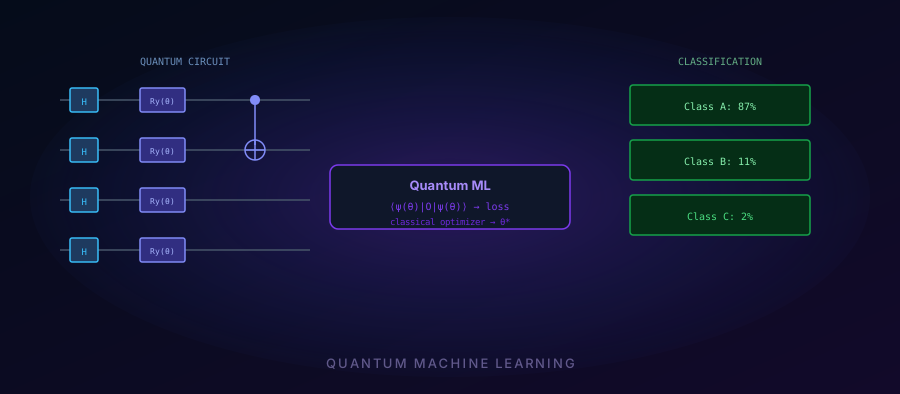
An introductory overview of how quantum computing accelerates AI — from qubits and variational circuits to real-world applications and an honest timeline.